Department of Geochemistry is occupied with research of composition, structure and properties of rocks including coal and derivatives using methods of surface chemistry, geochemistry and petrology. There are studies in processes of origin and accumulation of organic substance in rocks and in characteristics of biological sources and palaeo- environment. Products of not perfect combustion in relation with contamination of the environment and problems of carbon dioxide as a greenhouse gas are studied.
Projekt ICCOP - Interlaboratory Study of D7708-Standard Test Method for Microscopical Determination of the Reflectance of Vitrinite Dispersed in Sedimentary Rocks, Investigator: P.C. Hackley, Co-worker I. Sykorova and other 26 co-investigators from 15 countries
Thermally induced degradation of Westerly granite microstructure documented by dynamic elastic properties and pore space and damage characteristics.
2025
Ultrasonic sounding, petrographic image analysis, and mercury intrusion porosimetry was performed on 52 Westerly granite (Rhode Island, USA) specimens exposed to controlled heating from 100 °C to 800 °C. Elastic wave velocities, dynamic elastic moduli, and amplitudes decreased quasilinearly by more than 65% (P-wave), 75% (S-wave), and over 90% (elastic moduli). Damage evaluation by using two crack density parameters proved similar behavior. Direct and indirect evaluation of thermal treatment related microcracks by means of petrographic image analysis and mercury intrusion porosimetry revealed exponential character of porosity evolution, being accelerated above the quartz phase transition. Discrepancy between thermal treatment and profoundly non-linear increase in porosity and microcrack density can be satisfactorily explained from direct microscopic observation which revealed formation of crushed/powdered minerals within newly formed microcracks in 650‒800 °C range being related to tension-shearing along grain boundaries of phases with contrasting linear thermal expansion coefficients. This damage phenomenon, resulting in the so-called “clogged” porosity evidently overvalued measured elastic wave velocities. Current results thus underline importance of application of various methods / techniques during examination of changes in rock microfabric from decay processes because none of the methods is capable to cover all important factors alone.
Publication: D. Řimnáčová, V. Natherová, T. Lokajíček, M. Metružálek, A. Aminzadeh, M. Racek, R. Přikryl (2025). Thermally induced degradation of Westerly granite microstructure documented by dynamic elastic properties and pore space and damage characteristics. Bulletin of Engineering Geology and the Environment 83 (12), 518. https://doi.org/10.1007/s10064-024-04011-2
Image
The development of rock damage and the degradation of its micromechanical properties as a result of thermal stress
Acetone adsorption on hierarchically porous carbon foams: Effect of nitrogen doping and oxygen functional groups.
2025
Porous carbons are promising materials for volatile organic compound (VOC) capture, but the interplay between pore structure and surface chemistry remains poorly understood. Here, we report the synthesis of graphene-like carbon foams (CFs) with ultra-high surface area (2563 m2 g−1) and tunable surface functionalities for efficient acetone vapour adsorption. Using sodium ethoxide as a precursor, we prepared pristine CFs and systematically modified them via oxygen and nitrogen doping. Moderate oxygen doping (∼11 at.%) preserved microporosity, resulting in exceptional acetone uptake (1206 mg g−1), superior N2/acetone selectivity (∼11,500) and excellent regeneration stability compared to undoped CF samples. In contrast, aggressive oxidation (∼26 at.% O) and high nitrogen doping (7–13 at.%) significantly reduced porosity and adsorption capacity, with the most heavily doped samples showing the poorest performance. Near-ambient pressure X-ray photoelectron spectroscopy (NAP-XPS) was employed to gain further insight into the adsorption mechanisms, which were dominated by pore filling and weak electrostatic interactions from surface groups enhancing low-pressure uptake. Our findings establish a clear structure – function relationship, highlighting the critical balance between porosity and surface chemistry for VOC capture. These results also position CFs as scalable, regenerable adsorbents for industrial air purification and environmental remediation. Furthermore, the work provides a robust platform for engineering next-generation adsorbents with tailored performance, contributing to cleaner air technologies and sustainable chemical engineering solutions.
Publication: Maryna Vorokhta, M.I.M. Kusdhany, M. Vorochta, Martina Švábová, M. Nishihara, K. Sasaki, S.M. Lyth, 2025. Acetone adsorption on hierarchically porous carbon foams: Effect of nitrogen doping and oxygen functional groups. Chemical Engineering Journal, 521, https://doi.org/10.1016/j.cej.2025.166784
Image
Activated Carbon–Geopolymer Composites: Influence of Particle Size and Content on CO2 Adsorption and Mechanical and Thermal Properties
2025
Publication: Daniela Řimnáčová, Perná I., Novotná M., Šupová M., Nováková M., Bičáková O. (2025). Activated Carbon–Geopolymer Composites: Influence of Particle Size and Content on CO2 Adsorption and Mechanical and Thermal Properties. Crystals 15, 892.https://doi.org/10.3390/cryst15100892
Development of Compacted Alkali Activated Materials based on Phosphate Waste Washing Sludge and Natural Clay.
2025
Publication: Issa M., Andrejkovičová S., Zribi M., Daniela Řimnáčová, Oliveira M. S. A., Pálková H., Rocha F., Baklouti S. (2025). Development of Compacted Alkali Activated Materials based on Phosphate Waste Washing Sludge and Natural Clay. Construction and Building Materials 494, 143403. https://doi.org/10.1016/j.conbuildmat.2025.143403
Radiation-enhanced fluid diffusion and alteration around uraniferous inclusions in Cenomanian resinite from North Bohemia
2025
Publication: Strunga, V. Havránek, J. Lorinčík, K. Sihelská, P. Krist, Martina Havelcová, B. Čejková, J. Mizera (2025). Radiation-enhanced fluid diffusion and alteration around uraniferous inclusions in Cenomanian resinite from North Bohemia. Chemical Geology 673, 122554. https://doi.org/10.1016/j.chemgeo.2024.122554
Inter and intraspecies variability of terpene profiles of four spruce species growing in the Czech Republic: a chemotaxonomic study
2025
Publication: A. Malhocká, M. Švábová (2025). Inter and intraspecies variability of terpene profiles of four spruce species growing in the Czech Republic: a chemotaxonomic study. Biochemical Systematics and Ecology 123, 105095.https://doi.org/10.1016/j.bse.2025.105095
Evaluation of micropollutant removal from artificially recharged water using activated carbon
2025
Pilot scale micropollutant removal onto three types of granular activated carbon was tested over a period of 25 months. The columns were operated in a mode as similar as possible to the functioning of the main waterworks with the emphasis on minimizing the washing of the activated carbon layers. Sampling was performed monthly and a total of 222 micropollutants were evaluated. The columns were located at a waterworks in central Bohemia (Czech Republic). Real influent water from the river Jizera after artificial recharge and sand filtration was used. The aim of this study was to verify whether the process of micropollutant removal was suitable under the operating conditions at the waterworks. Clear seasonal patterns of micropollutant concentrations in the influent were detected. All three columns were able to effectively remove or substantially decrease the concentration of most micropollutants. The best performance was shown for the activated carbon Aquasorb 5005, which had the highest surface area and a well developed porous structure with the highest proportion of mesopores. The data were evaluated in order to identify micropollutant parameters important for their removal, and the pH-dependent octanol/water partition coefficient was identified as the key parameter. Other important parameters were charge and polar surface area of the micropollutant molecules.
Publication: Švábová, M., Šváb, M., Vorokhta, M., Pohořelý, M., 2025. Evaluation of micropollutant removal from artificially recharged water using activated carbon. J. Hazard. Mater. 494, https://doi.org/10.1016/j.jhazmat.2025.138504
Clues on the Australasian impact crater site inferred from detailed mineralogical study of a monazite inclusion in a Muong Nong tektite
2025
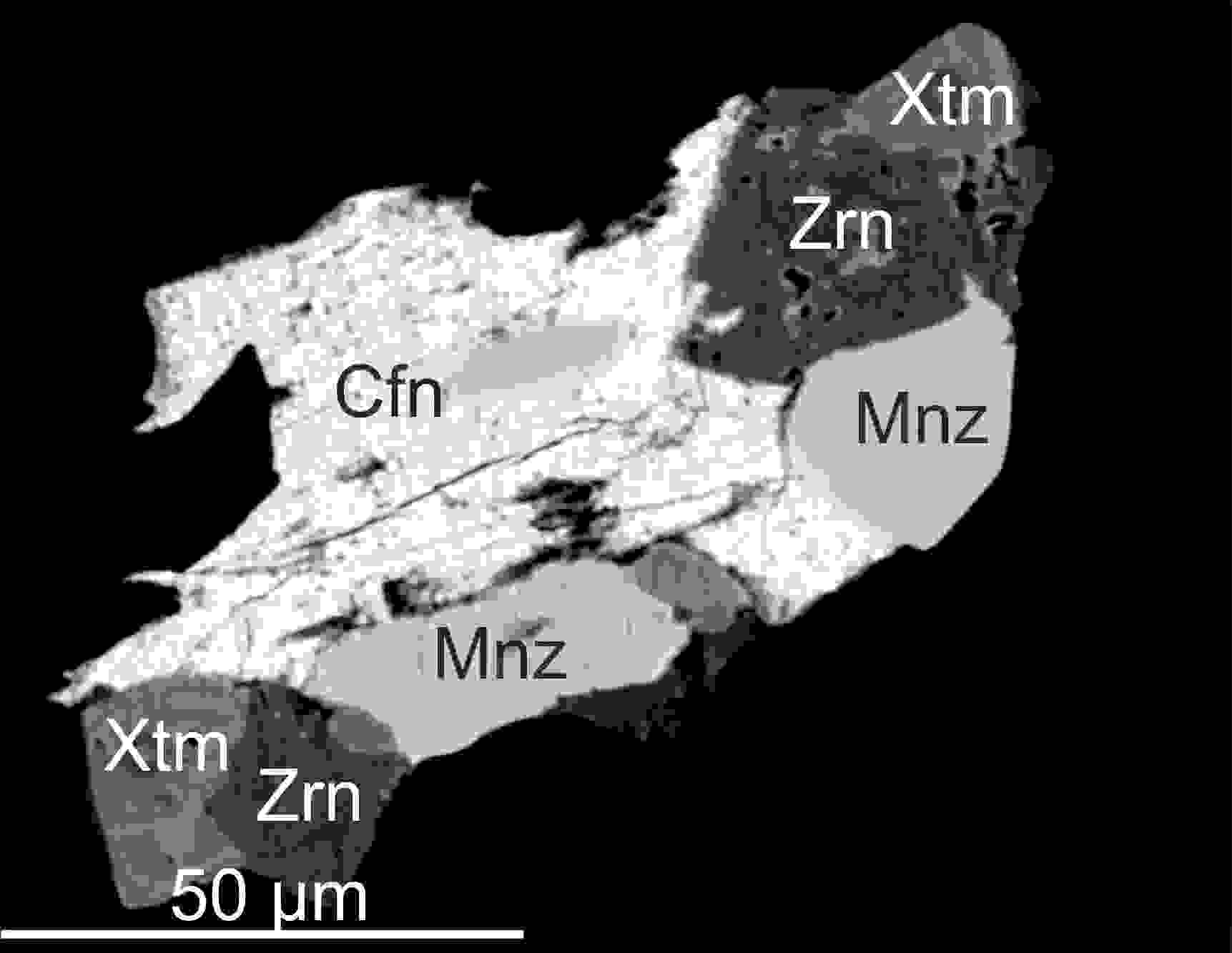
Publication: J. Mizera, O. Bakhmachuk, V. Strunga, V. Procházka (2025). Clues on the Australasian impact crater site inferred from detailed mineralogical study of a monazite inclusion in a Muong Nong tektite. Geology 53, e582. https://doi.org/10.1130/G53049C.1
Climatically-driven cessation of coal formation in tropical Pangea around the Pennsylvanian-Permian boundary; an example from alluvial-lacustrine succession of the Líně Formation (Czechia)
2025
Publication: Nádaskay, R., Opluštil, S., Martínek, K., Šimůnek, Z., Zajíc, J., Drábková, J., Podzimková, P., Sýkorová, I. (2025). Climatically-driven cessation of coal formation in tropical Pangea around the Pennsylvanian-Permian boundary; an example from alluvial-lacustrine succession of the Líně Formation (Czechia). International Journal of Coal Geology 300, 1–31. https://doi.org/10.1016/j.coal.2025.104694
Chemotaxonomy according to leaf terpenes of eight cypress species growing in the Czech Republic in the light of modern phylogenetic classification
2025
Publication: Alexandra Malhocká, Martina Švábová, Tomáš Suchý, 2025. Chemotaxonomy according to leaf terpenes of eight cypress species growing in the Czech Republic in the light of modern phylogenetic classification. Biochemical Systematics and Ecology 120, 104980
Alteration of Durbachites and U-Th Mineralization in the Durbachites of the Třebíč Pluton, Czech Republic
2025
René M. (2025). Alteration of durbachites and U-Th mineralization in the durbachites of the Třebíč pluton, Czech Republic. In: René M. (ed.) Ore Geology, IntechOpen, London,115–129. https://www.intechopen.com/chapters/1207364
Formation and radiolytic alteration of uraniferous solid bitumen related to hydrothermal base-metal mineralizationin the Bytíz deposit, Příbram district, Czech Republic
2024
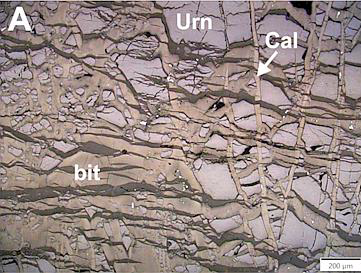
The Bytíz deposit is a part of the Příbram uranium and base-metal ore district. It is an example of a vein-type deposit with polyphase hydrothermal mineralization. Samples of uraniferous solid bitumen from Bytíz with U content up to 38 wt% are characterized petrologically, geochemically, and mineralogically using EPMA, Raman and infrared microspectroscopy. The bitumen-bearing samples consist of base-metal sulfides: galena, sphalerite, pyrite, chalcopyrite, and also minor amounts of tetrahedrite, stibnite, and acanthite, associated with Mn-bearing calcite, quartz and silicates (chlorite, muscovite). Solid bitumens were found in the form of small veins and droplets, and roundish to irregular accumulations, in association with uraninite and carbonate veins.
Publication: Tatiana Larikova, Ivana Sýkorová, Martin Racek, Martina Havelcová, Vladimír Machovič, Ladislav Lapčák, 2024. Formation and radiolytic alteration of uraniferous solid bitumen related to hydrothermal base-metal mineralization in the Bytíz deposit, Příbram district, Czech Republic. International Journal of Coal Geology 293, 2024, 104590.
Image
Controlling the structure of nitrogen-doped zeolite-templated carbon for CO2 capture based on the synthesis conditions
2024
Publication: N. Kostkova, Maryna Vorokhta, M. Kormunda, R. Pilar, G. Sadovska, P. Honcova, E. Mikyskova, J. Moravkova, P. Sazama, 2024. Controlling the structure of nitrogen-doped zeolite-templated carbon for CO2 capture based on the synthesis conditions, Microporous and Mesoporous Materials 379, 113286. https://doi.org/10.1016/j.micromeso.2024.113286
Alkali-activated geopolymers based on calcined phosphate sludges and metakaolin
2024
Publication: Karoui O., Andrejkovičová S., Pato P., Patinha C., Perná I., Řimnáčová D., Hajjaji W., Ascenão G., Rocha F., Mlayah A. (2024): Alkali‑activated geopolymers based on calcined phosphate sludges and metakaolin. Environmental Science and Pollution Research 31, 45138–45161. https://doi.org/10.1007/s11356-024-34025-y
Foamed phosphate by-product based geopolymers and dye adsorption efficiency
2024
Publication: Karoui O., Andrejkovičová S., Pato P., Patinha C., Řimnáčová D., Perná I., Hajjaji W., Rocha F., Mlayah A. (2024): Foamed phosphate by-product based geopolymers and dye adsorption efficiency. Applied Clay Science 257, 107446. https://doi.org/10.1016/j.clay.2024.107446
Metakaolin-based geopolymer formation and properties: The influence of the maturation period and environment (air, demineralized and sea water)
2024
Publication: Perná I., Novotná M., Hanzlíček T., Šupová M., Řimnáčová D. (2024): Metakaolin-based geopolymer formation and properties: The influence of the maturation period and environment (air, demineralized and sea water). Journal of Industrial and Engineering Chemistry 134, 415–424. https://doi.org/10.1016/j.jiec.2024.01.005
Quaternary floodings in the Zanzibar Channel (NW Indian Ocean, Tanzania) – Identifying palaeoceanographic patterns and palaeoenvironment using a multiproxy study
2024
Publication: K. Holcová, F. Scheiner, Martina Havelcová, P. Kraft, L. Ackerman, A. Tichá, K. Česáková, R. Milovský, 2024. Quaternary floodings in the Zanzibar Channel (NW Indian Ocean, Tanzania) – Identifying palaeoceanographic patterns and palaeoenvironment using a multiproxy study. Marine Geology 107366. https://doi.org/10.1016/j.margeo.2024.107366
Comparison of microwave and thermal reactivation of spent activated carbons: A pilot scale demonstration
2024
Publication: Martina Švábová, Marek Šváb, Maryna Vorokhta, 2024. Comparison of microwave and thermal reactivation of spent activated carbons: A pilot scale demonstration. Journal of Water Process Engineering 67, 106189. https://doi.org/10.1016/j.jwpe.2024.106189
Formation and radiolytic alteration of uraniferous solid bitumen related to hydrothermal base-metal mineralizationin the Bytíz deposit, Příbram district, Czech Republic
2024
Publication: Tatiana Larikova, Ivana Sýkorová, M. Racek, Martina Havelcová, V. Machovič, L. Lapčák, 2024. Formation and radiolytic alteration of uraniferous solid bitumen related to hydrothermal base-metal mineralizationin the Bytíz deposit, Příbram district, Czech Republic. International Journal of Coal Geology 286, 104590. https://doi.org/10.1016/j.coal.2024.104590
Solid bitumen as an indicator of petroleum migration, thermal maturity, and contact metamorphism: A case study in the Barrandian Basin (Silurian - Devonian), Czech Republic
2024
Publication: V. Suchý, Ivana Sýkorová, J. Zachariáš, K. Brabcová Pachnerová, P. Dobeš, Martina Havelcová, I. Rozkošný, Q. Luo, W. Cao, J. Wu, P. Mácová, A. Viani, I. Světlík, D. Maxa, 2024. Solid bitumen as an indicator of petroleum migration, thermal maturity, and contact metamorphism: a case study in the Barrandian Basin (Silurian - Devonian), Czech Republic. International Journal of Coal Geology 286, 104493. https://doi.org/10.1016/j.coal.2024.104493
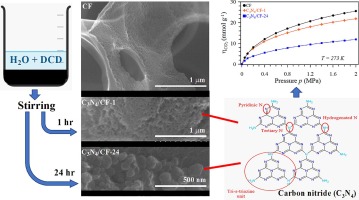
Hierarchically porous carbon foams coated with carbon nitride: Insights into adsorbents for pre-combustion and post-combustion CO2 separation
2025
Publication: Maryna Vorokhta, M. I. M. Kusdhany, Martina Švábová, M. Nishihara, K. Sasaki, S. M. Lyth, 2025. Hierarchically porous carbon foams coated with carbon nitride: Insights into adsorbents for pre-combustion and post-combustion CO2 separation, Separation and Purification Technology 354, 129054. https://doi.org/10.1016/j.seppur.2024.129054
Image
Graphical abstract
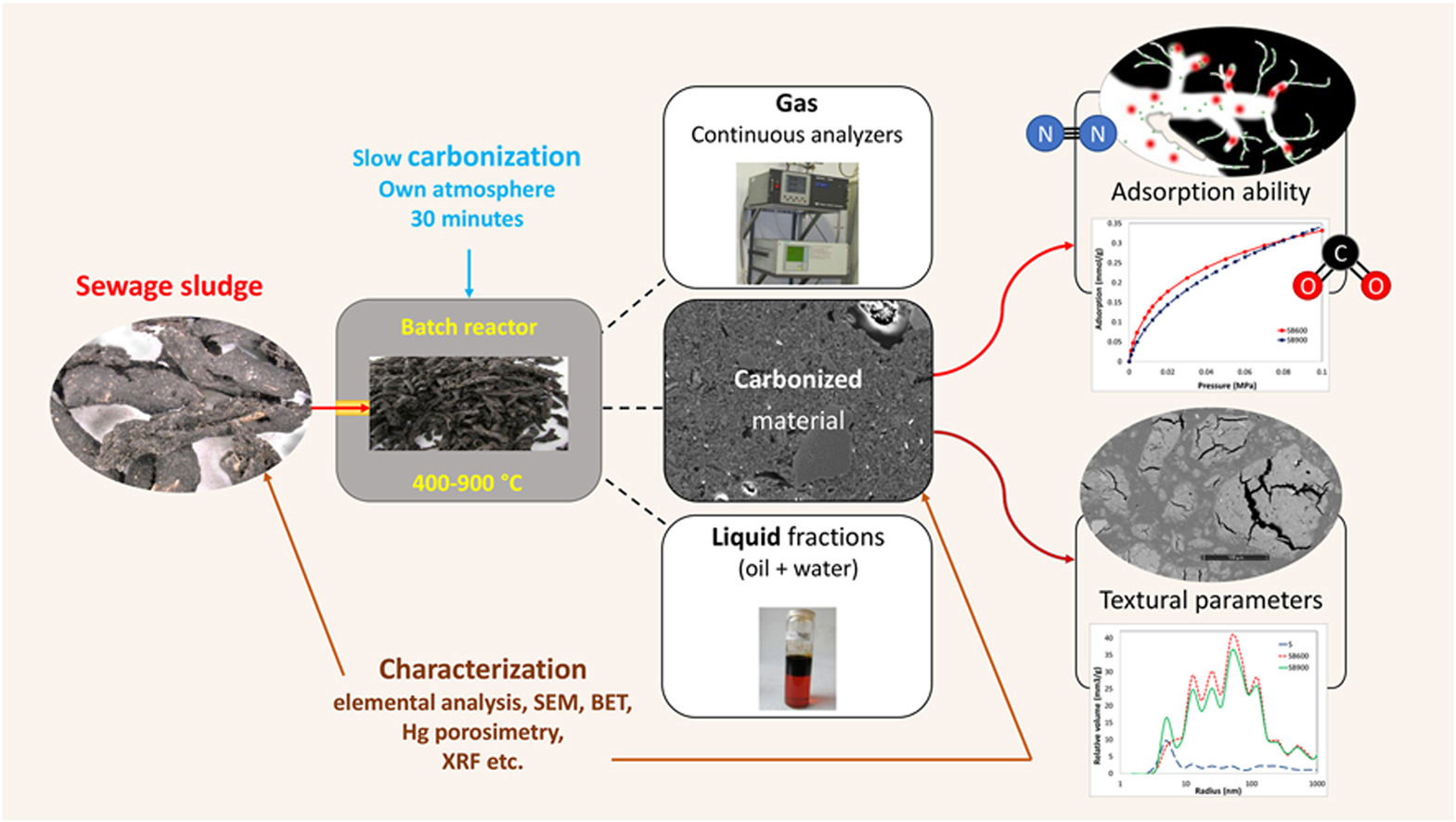
The effect of carbonization temperature on textural properties of sewage sludge-derived biochars as potential adsorbents
2024
Publication: Řimnáčová D., Bičáková O., Moško J., Straka P., Čimová N. (2024): The effect of carbonization temperature on textural properties of sewage sludge-derived biochars as potential adsorbents. Journal of Environmental Management 359, 120947. https://doi.org/10.1016/j.jenvman.2024.120947
Image
Graphical abstract
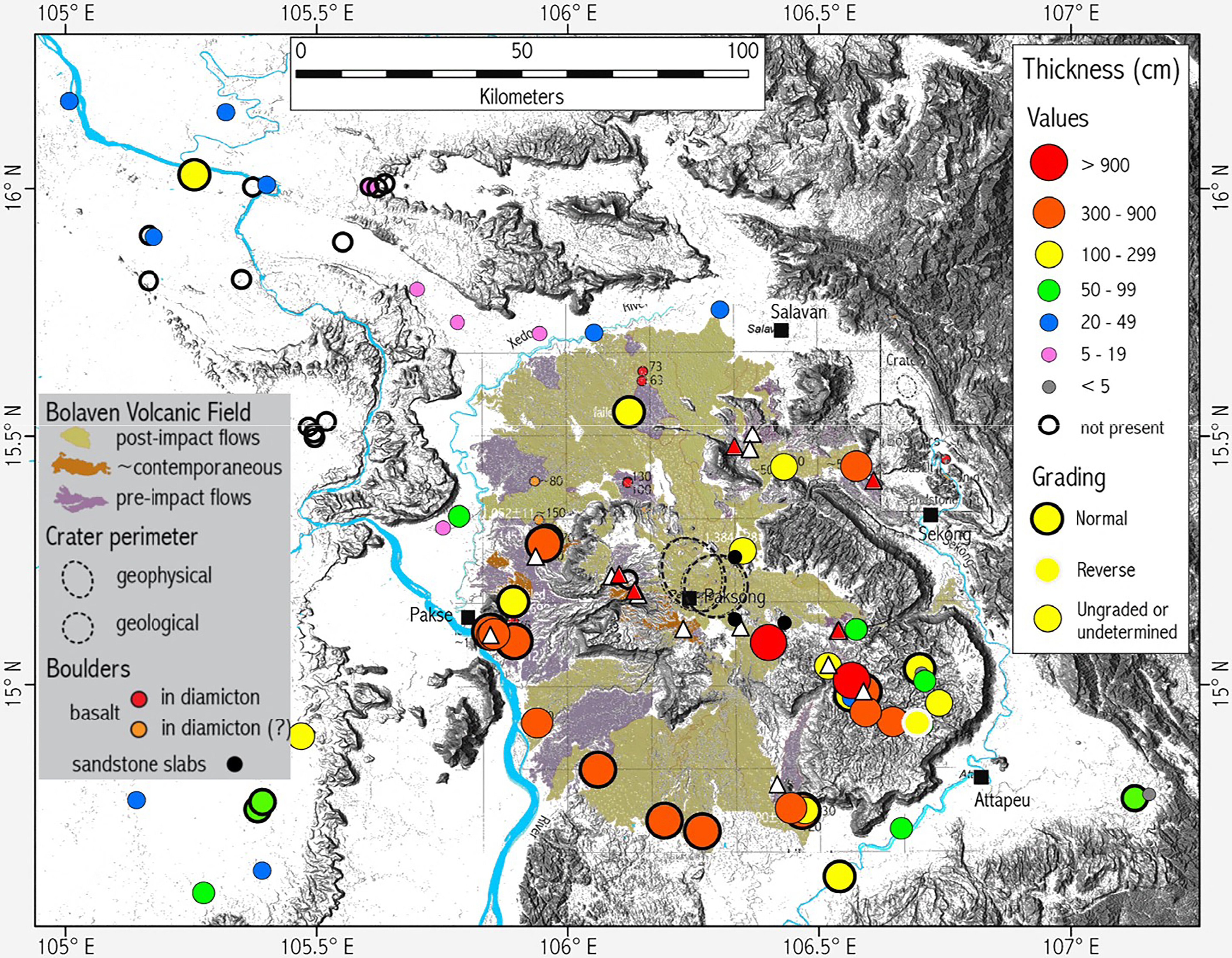
Proximal ejecta of the putative parent impact crater for Australasian tektites at the Bolaven Plateau
2024
Publication: Jiří Mizera, Vladimír Strunga (2024): Proximal ejecta of the putative parent impact crater for Australasian tektites at the Bolaven Plateau. Proceedings of the National Academy of Sciences 121, e2400122121. doi.org/10.1073/pnas.2400122121
Image
Map showing distribution of the diamicton (circles with thickness in the legend) and lava flows on and around BP. Triangles indicate lavas with 40Ar-39Ar ages older than or roughly contemporaneous with the AAT impact; their color indicates alkaline (red) or tholeiitic (white) basalts. The map has been constructed by merging maps in figures 7 and S7 from ref. 1, and complemented with age and composition data from supplements in ref. 2.
Jurassic Park approached: a coccid from kimmeridgian cheirolepidiacean Aintourine Lebanese amber
2024
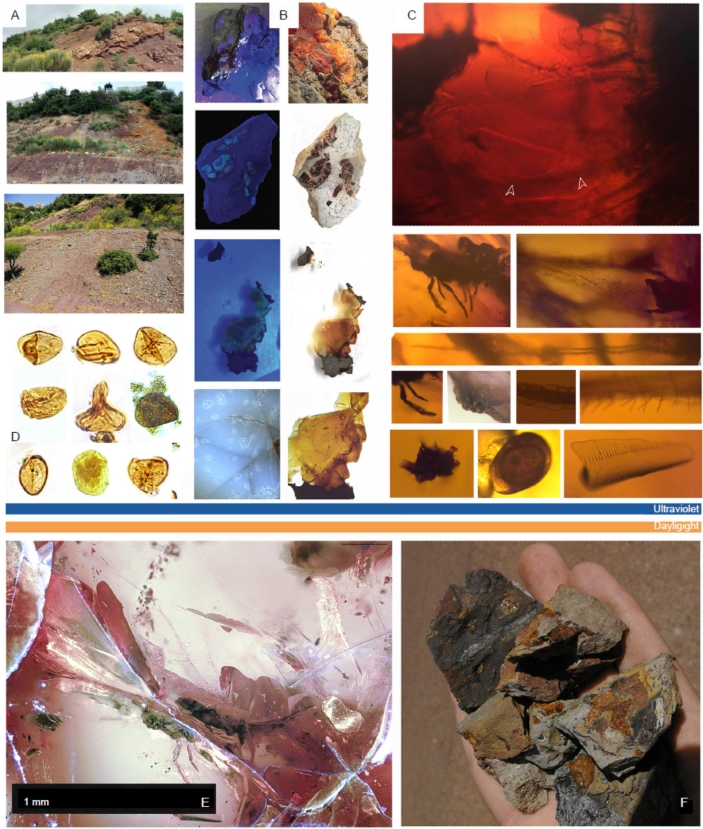
With the exception of a fly and a mite from the Triassic of Italy, all Mesozoic amber arthropods are from the Cretaceous. Late Jurassic Lebanese amber from Aintourine revealed a completely preserved adult coccid male (wing length 0.8 mm), Jankotejacoccus libanogloria gen. et sp. n., the earliest record of a plant sucking scale insect. Associated plant material included the cheirolepidiaceans Protopodocarpoxylon, Brachyphyllum and Classostrobus, plus Classopolis pollen, suggesting a forested temporary swamp habitat with ferns, tree ferns, water ferns, tall araucarian and ginkgoacean trees and shrubs. (Sub)tropic lateritic soil with vegetation debris underwent incomplete microbial decomposition in an anoxic water environment of peat swamp development. Strata-associated marine organisms support the Kimmeridgian age revealed by zircons. The discovery opens a new field of research in Jurassic amber fossils.
Publication: P. Vršanský, H. Sendi, J. Kotulová, J. Szwedo, M. Havelcová, H. Palková, L. Vršanská, J. Sakala, Ľ. Puškelová, M. Golej, A. Biroň, D. Peyrot, D. Quicke, D. Néraudeau, P. Uher, S. Maksoud, D. Azar, 2024. Jurassic Park approached: a coccid from kimmeridgian cheirolepidiacean Aintourine Lebanese amber. National Science Review, nwae200. https://doi.org/10.1093/nsr/nwae200
Image
Figure: First Jurassic insect from amber (Kimmeridgian Aintourine, Lebanon). (A) Locality and its 708 surrounding (see MM). (B) rough and prepared samples in UV and white light – from the same rock piece 709 as the holotype. (C and E) details of the insect inclusion Jankotejacoccus libanogloria Szwedo, Azar et 710 Sendi, sp. n., holotype, SNM Z 40023A and syninclusions. (D) pollen (SP-33219-1.1-4): upper row, 711 spores of a tree fern affiliated to Cyatheaceae/ Dicksoniaceae (2x Cyathidites spp., Deltoidospora sp.);
Comparison of microwave and thermal reactivation of spent activated carbons: A pilot scale demonstration
2024
Publication: Švábová M., Šváb M., Vorokhta M., 2024. Comparison of microwave and thermal reactivation of spent activated carbons: A pilot scale demonstration, Journal of Water Process Engineering 67, 106189.
Structural analysis of fossilized tree trunks from the Miocene Mydlovary Formation of the South Bohemian Basin (Czech Republic)
2024
Publication: Martina Havelcová, Ivana Sýkorová, Petr Rajlich, 2024. Structural analysis of fossilized tree trunks from the Miocene Mydlovary Formation of the South Bohemian Basin (Czech Republic). Palaeoworld 34, 100886.
Physicochemical characteristics of natural and anthropogenic inorganic and organic solid porous materials: Comprehensive view
2024
Publication: Daniela Řimnáčová, Alexandra Malhocká, Martina Havelcová, Hendrych J., Zuzana Weishauptová, 2024. Physicochemical characteristics of natural and anthropogenic inorganic and organic solid porous materials: Comprehensive view. Materialia 33, 101973.
Evolution of palaeoclimate, palaeoenvironment and vegetation in Central Europe during the Miocene Climate Optimum.
2023
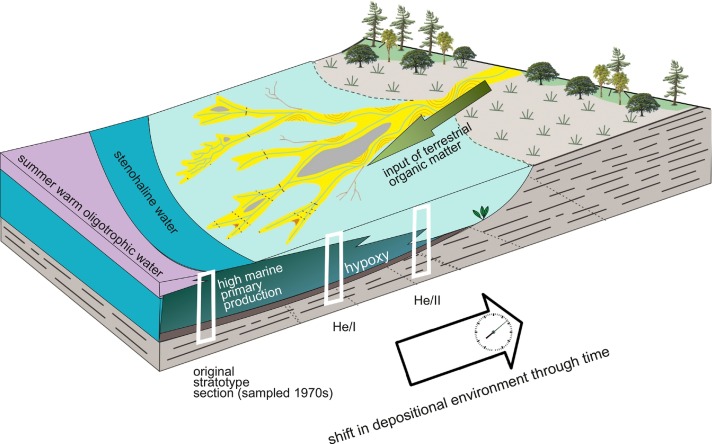
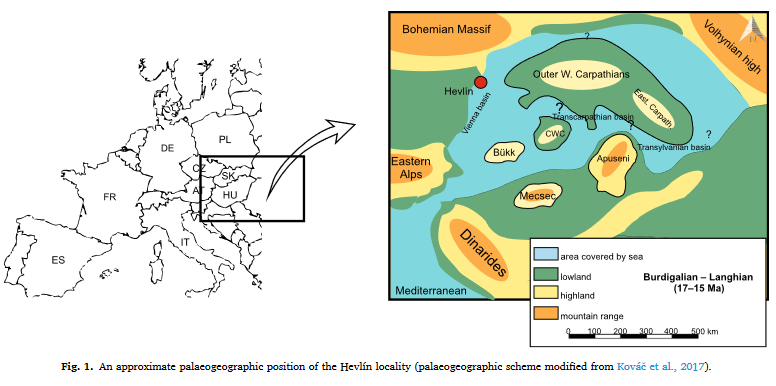
The studied parastratotype profile of the regional Carpathian foreland (late Burdigalien) in the Hevlín quarry indicates the existence of a warm-temperate to subtropical palaeoclimate with a zonal vegetation cover of subtropical deciduous evergreen forest and warm-temperate to subtropical mixed mesophytic forest. These findings are consistent with global trends (high temperatures and high sea level) and suggest the occurrence of relatively widespread wet conditions during the Miocene climatic optimum. The result was achieved in collaboration with the Faculty of Science of Charles University Prague, the Faculty of Science of Masaryk University Brno, the University of Bonn and Geological Institute of the CAS.
Publication: F. Scheiner, M. Havelcová, K. Holcová, N. Doláková, S. Nehyba, L. Ackerman, J. Trubač, Š. Hladilová, J. Rejšek, T. Utescher, 2023: Evolution of palaeoclimate, palaeoenvironment and vegetation in Central Europe during the Miocene Climate Optimum. Palaeogeography, Palaeoclimatology, Palaeoecology 611, 111364, doi.org/10.1016/j.palaeo.2022.111364
Image
Fig. A schematic simplified model of the reconstructed palaeoenvironment at the Hevlín locality. Positions of the analysed sections within the depositional system are indicated by white columns
Microporous carbon foams: The effect of nitrogen-doping on CO2 capture and separation via pressure swing adsorption
2023
Publication: M. Vorokhta, M. I. M. Kusdhany, D. Vöröš, M. Nishihara, K. Sasaki, S.M., 2023. Microporous carbon foams: The effect of nitrogen-doping on CO2 capture and separation via pressure swing adsorption. Chemical Engineering Journal 471, 144524 https://doi.org/10.1016/j.cej.2023.144524
Formation of Australasian tektites from gravity and magnetic indicators.
2023
Karimi, K., Kletetschka, G., Mizera, J., Meie, V., 2023. Formation of Australasian tektites from gravity and magnetic indicators. Scientific Reports 13, 12868. https://doi.org/10.1007/s10967-022-08692-5
Diversity of the terpene synthesis in the Thuja species – a comparative chemotaxonomic study.
2023
Malhocká, A., Švábová, M., 2023. Diversity of the terpene synthesis in the Thuja species – a comparative chemotaxonomic study. Biochemical systematics and ekology 110, 104703. https://doi.org/10.1016/j.bse.2023.104703
Activated three-dimensionally ordered micromesoporous carbons for CO2 capture
2023
Publication: M. Vorokhta, J. Nováková, M. Dopita, I. Khalakhan, V. Kopecký Jr., M. Švábová, 2023. Activated three-dimensionally ordered micromesoporous carbons for CO2 capture. Materials Today Sustainability 24, 100509. https://doi.org/10.1016/j.mtsust.2023.100509
Oxygen determination in the Ti certified reference material ERM-EB090b by instrumental photon activation analysis
2023
Publication: Mizera, J., Krausová, I., Chvátil, D., Olšanský, V., 2023. Oxygen determination in the Ti certified reference material ERM-EB090b by instrumental photon activation analysis. Journal of Radioanalytical and Nuclear Chemistry doi: 10.1007/s10967-023-09260-1
A chemotaxonomic analysis of terpenes variation in Metasequoia glyptostroboides and Sequoiadendron giganteum resins
2023
Malhocká, A., Švábová, M., 2023. A Chemotaxonomic Analysis of Terpenes Variation in Metasequoia glyptostroboides and Sequoiadendron giganteum resins. Journal of Essential Oil Bearing Plants 26. https://doi.org/10.1080/0972060X.2023.2280139
New Insights into the Internal Structures and Geotechnical Rock Properties of the Giant San Andrés Landslide, El Hierro Island, Spain
2023
Publication: Klimeš J., Hussain Y., Mreyen A.S., Cauchie L., Schlögel R., Piroton V., Petružálek M., Blahůt J., René M., Meletlidis S., Havenith H.B., 2023. New insights into internal structures and geotechnical rock properties of the giant San Andrés landslide, El Hierro island, Spain. Remote Sensing 15, 1627, 1–22. https://doi.org/10.3390/rs15061627
The thermal stability of carbon materials in the air: Quantitative structural investigation of thermal stability of carbon materials in air
2023
G. Sádovská, P. Honcová, J. Morávková, I. Jirka, M. Vorokhta, R. Pilař, J. Rathouský, D. Kaucký, E. Mikysková, P. Sazama, 2023. The thermal stability of carbon materials in the air: Quantitative structural investigation of thermal stability of carbon materials in air. Carbon 206, 211-225. https://doi.org/10.1016/j.carbon.2023.02.042
Natural bitumen hosted uranium mineralization: stability of the radiogenic system.
2023
Strunga, V., Sihelská, K., Lorinčík, J., Holá, M., Krausová, I., Goliáš, V., Čurda, M., Mizera, J., 2023. Natural bitumen hosted uranium mineralization: stability of the radiogenic systém. Journal of Radioanalytical and Nuclear Chemistry 332, 1597–1606. https://doi.org/10.1007/s10967-022-08692-5
Biochar as an effective material for acetone sorption and the effect of surface area on the mechanism of sorption
2023
Švábová M., Bičákova O., Vorokhta M., 2023. Biochar as an effective material for acetone sorption and the effect of surface area on the mechanism of sorption. Journal of Environmental Management 348, 119205. https://doi.org/10.1016/j.jenvman.2023.119205
Mercury Occurrence and Speciation in Sediments from Hard Coal Mining in Czechia.
2023
Publication: Vöröš D., Baizán P. D., Slavíček K., Díaz-Somoano M., Geršlová E., 2023. Mercury Occurrence and Speciation in Sediments from Hard Coal Mining in Czechia. Journal of Hazardous Materials 459, 132204. https://doi.org/10.1016/j.jhazmat.2023.132204
Microporous carbon foams: The effect of nitrogen-doping on CO2 capture and separation via pressure swing adsorption
2023
M. Vorokhta, M. I. M. Kusdhany, D. Vöröš, M. Nishihara, K. Sasaki, S.M., 2023. Microporous carbon foams: The effect of nitrogen-doping on CO2 capture and separation via pressure swing adsorption. Chemical Engineering Journal 471, 144524. https://doi.org/10.1016/j.cej.2023.144524
Formation of Australasian tektites from gravity and magnetic indicators
2023
Karimi, K., Kletetschka, G., Mizera, J., Meie, V., 2023. Formation of Australasian tektites from gravity and magnetic indicators. Scientific Reports 13, 12868. https://doi.org/10.1007/s10967-022-08692-5 Q2
Diversity of the terpene synthesis in the Thuja species – a comparative chemotaxonomic study
2023
Malhocká, A., Švábová, M., 2023. Diversity of the terpene synthesis in the Thuja species – a comparative chemotaxonomic study. Biochemical systematics and ekology 110, 104703. https://doi.org/10.1016/j.bse.2023.104703
A chemotaxonomic analysis of terpenes variation in Metasequoia glyptostroboides and Sequoiadendron giganteum resins
2023
Malhocká, A., Švábová, M., 2023. A Chemotaxonomic Analysis of Terpenes Variation in Metasequoia glyptostroboides and Sequoiadendron giganteum resins. Journal of Essential Oil Bearing Plants 26. https://doi.org/10.1080/0972060X.2023.2280139
Natural bitumen hosted uranium mineralization: stability of the radiogenic system
2023
Strunga, V., Sihelská, K., Lorinčík, J., Holá, M., Krausová, I., Goliáš, V., Čurda, M., Mizera, J., 2023. Natural bitumen hosted uranium mineralization: stability of the radiogenic systém. Journal of Radioanalytical and Nuclear Chemistry 332, 1597–1606. https://doi.org/10.1007/s10967-022-08692-5
The thermal stability of carbon materials in the air: Quantitative structural investigation of thermal stability of carbon materials in air
2023
G. Sádovská, P. Honcová, J. Morávková, I. Jirka, M. Vorokhta, R. Pilař, J. Rathouský, D. Kaucký, E. Mikysková, P. Sazama, 2023. The thermal stability of carbon materials in the air: Quantitative structural investigation of thermal stability of carbon materials in air. Carbon 206, 211-225. https://doi.org/10.1016/j.carbon.2023.02.042
Evolution of palaeoclimate, palaeoenvironment and vegetation in Central Europe during the Miocene Climate Optimum
2023
F. Scheiner, M. Havelcová, K. Holcová, N. Doláková, S. Nehyba, L. Ackerman, J. Trubač, Š. Hladilová, J. Rejšek, T. Utescher, 2023. Evolution of palaeoclimate, palaeoenvironment and vegetation in Central Europe during the Miocene Climate Optimum. Palaeogeography, Palaeoclimatology, Palaeoecology 611, 111364. https://doi.org/10.1016/j.palaeo.2022.111364
Chemical character and structure of uraniferous bitumens (Vrchlabí, Czech Republic)
Neutron Activation Analysis in Urban Geochemistry: Impact of Traffic Intensification after Opening the Blanka Tunnel Complex in Prague
2022
Mizera J., Havelcová M., Machovič V., Borecká L., Vöröš D., 2022. Neutron Activation Analysis in Urban Geochemistry: Impact of Traffic Intensification after Opening the Blanka Tunnel Complex in Prague. Minerals 12, 281. DOI: doi.org/10.3390/min12030281
The method of optical emission spectrometry with inductively coupled plasma (ICP-OES) is used for the elemental analysis of water and solid matrices. The method enables the determination of a wide range of major, minor and trace elements. The spectrometer uses the principle of emission and subsequent detection of light radiation of ionized elements present in the sample. The operation of the device requires argon as a carrier gas for plasma generation. For the analysis of solid samples, it is necessary to ensure their decomposition and subsequent completion into solution
ICP/OES equipment optical emission spectrometer with inductively coupled plasma Agilent 5900 with simultaneous axial and radial plasma observation (SVDV mode) • autosampler • Hg hydride vapor generator • PreeKem M6 microwave digestion with the HP16 rotor
Determination of microlithotype composition of coal (ISO 7404 - 4)
Quality test of solid fuel for spits (ČSN-EN 1860-2)
Determination of microhardness
DuraScan - 20, Struers
Chemistry Laboratory
The laboratories conduct chemical analyses of geological materials. Proximate and ultimate analyses are employed for the basic characterization of samples, providing information on moisture, volatile matter, fixed carbon, ash content, and elemental composition. Advanced analytical techniques, including gas chromatography–mass spektrometry and inductively coupled plasma optical emission spectrometry are applied to determine the detailed organic and inorganic composition of the samples. The facilities are additionally equipped with sample-preparation instruments to ensure representative and homogeneous material prior to analysis.
Lenka Borecká Doc. Mgr. Eva Geršlová, Ph.D. Mgr. Martina Havelcová Ph.D. Jan Kazda Ing. Vladimír Machovič, CSc. Mgr. Alexandra Malhocká (Špaldoňová), Ph.D.
Microscopy Laboratory
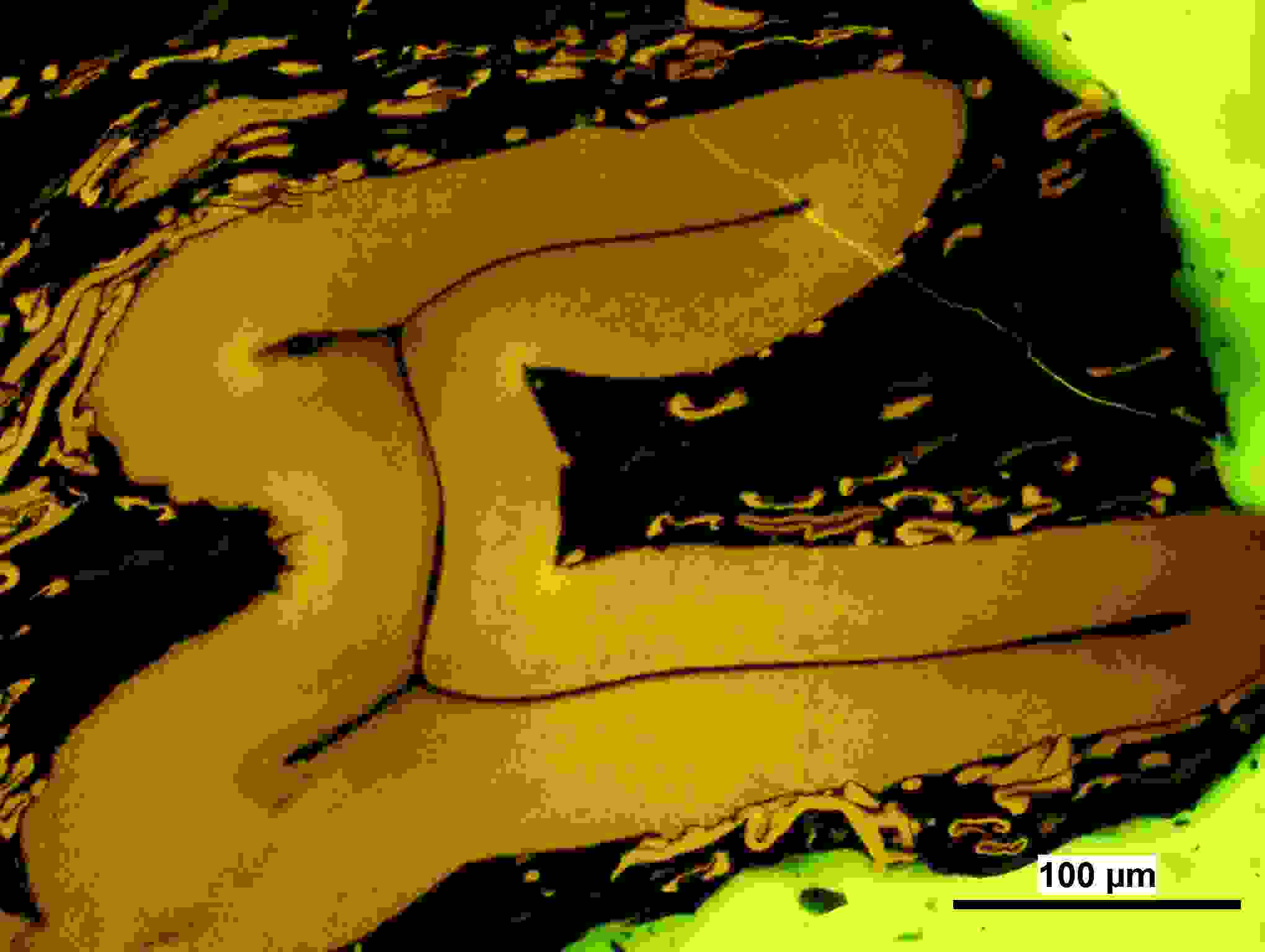
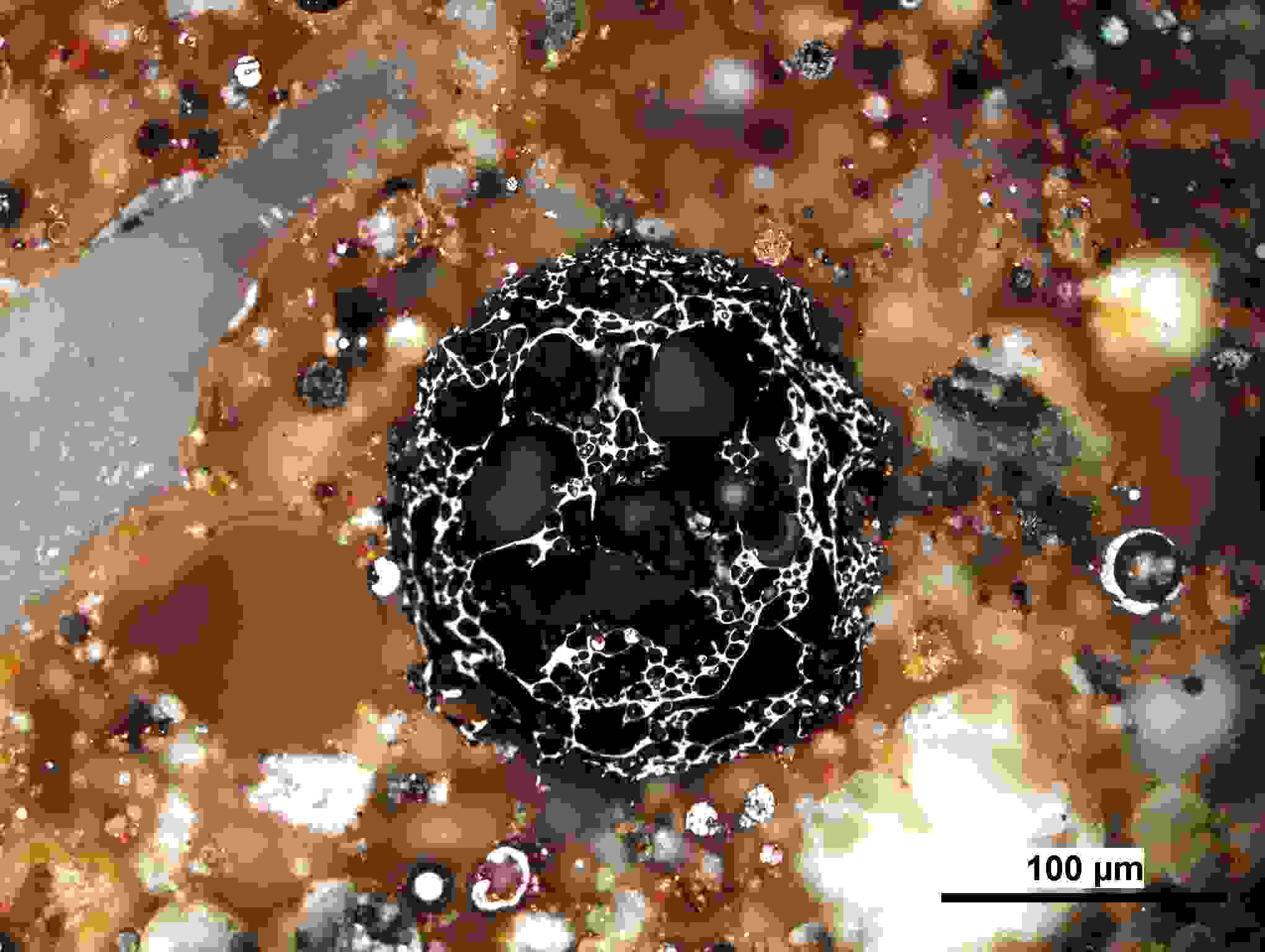
The laboratory employs optical microscopy to study the composition and structure of rocks, sediments, coal, and other materials within the framework of organic petrology and paleontology. Microscopic observations are carried out using instruments equipped for reflected and transmitted light, as well as fluorescence microscopy. A dedicated preparation room is available for producing thin and polished sections of samples.
Msc. Tatiana Larikova, PhD. RNDr. Miloš René, CSc. Ing. Ivana Sýkorová, DrSc. Alexandr Šulc
Laboratory of Sorption and Porosimetric Analyses
The laboratory focuses on the study of porous textures of rock materials and their alterations induced by both environmental conditions and technological processes. In cooperation with the Faculty of Science of Charles University in Prague, a joint laboratory is established for effective use of the instrumental equipment of both parties for addressing issues in the fields of basic and applied research. Sorption properties of porous materials from various media are tested, including sorption of contaminants from water and sorption of gases and vapours.
Alena Jandečková Marta Koptová Ing. Daniela Řimnáčová, Ph.D. Ing. Martina Švábová, Ph.D. Mgr. Maryna Vorokhta, Ph.D. Ing. Zuzana Weishauptová, DrSc.